Connect your hospital systems
For hospitals and clinics, we connect patient records, orders and test results with the applications staff use every day. eThing helps your team find the information it needs in the systems it already uses.
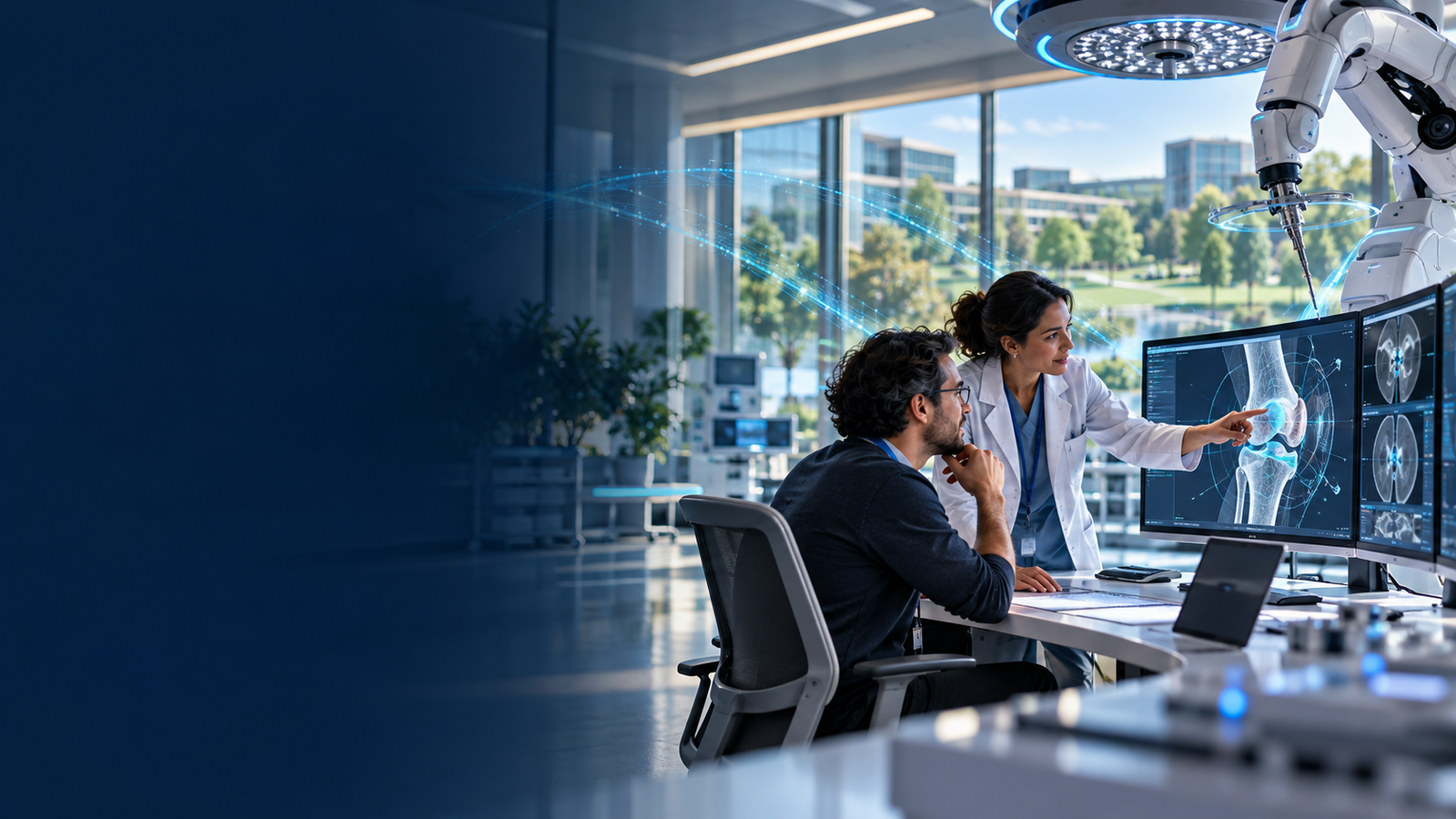
Connecting clinical workflows, intelligent software and medical technology.
Contact useThing provides healthcare software development and medical equipment engineering tailored to each project’s requirements. We support applications and equipment used in specialties such as orthopaedics, radiology and pathology. Our work spans software design, integration and testing, along with support throughout medical equipment product development. We work with medical device companies to define practical solutions around intended use, technical constraints and delivery priorities. Clear requirements, documented interfaces and test evidence keep your clinical and technical stakeholders aligned. You get a defined scope, visible progress and a practical handover, with responsibilities agreed from the start.
Whether you run a hospital, build a health app or develop medical devices, we help you plan, build and test the software your team needs.
For hospitals and clinics, we connect patient records, orders and test results with the applications staff use every day. eThing helps your team find the information it needs in the systems it already uses.
For healthtech companies, we build apps for patients and healthcare professionals and improve existing products. We help with screen design, development and connections to the systems your users already rely on.
For medical device teams, we build clear screens for diagnostic equipment and surgical appliances. We help display device status, connect equipment to applications and test how the software handles everyday tasks and errors.
Our team develops applications that connect fitness trackers, sensors and medical equipment to support remote health monitoring. Data processing and visualisation tools help patients and healthcare professionals review the information collected.
We use IoT connectivity and AI features to organise incoming health data, identify patterns and flag information for review. The agreed scope, intended use and clinical requirements guide how these features are designed and evaluated.

We develop and refine software for everyday clinical workflows, including applications connected to medical equipment. The design process considers clinical protocols, the information professionals need and the tasks they perform.
Our approach to software development for healthcare connects technology with practical clinical requirements. For a health care EHR workflow, we define appropriate access to patient records and dependable data exchange across departments. This helps teams plan software around operational efficiency and clinical decision-making.

eThing develops software for surgical robots and navigation systems. Our engineering work connects equipment with medical imaging and supports real-time tracking within the agreed project scope. We define reliability, risk and interoperability requirements with the project team and test the software against its intended use and applicable quality processes.
Each project starts with the people who will use the system and the information they need during a procedure. We define how imaging, tracking data and equipment status are displayed together, how the interface shows changes, and how the software communicates with connected devices.
Our test plans cover delayed updates, interrupted tracking and lost connections, alongside the expected workflow. We document system behaviour and test results so the project team reviews issues and decides what needs to change. We define the test scope and required evidence around the system’s intended use and the manufacturer’s quality process.

We design interfaces for healthcare professionals operating complex medical equipment. The design process considers clinical workflows, decision-making needs and the conditions in which the equipment will be used. Readable layouts, responsive controls and clear data visualisation help users find information and understand the available actions.
For surgical appliances with software components, we build instrument-status displays, service logs and interfaces for navigation or powered equipment. Clear alerts, readable controls and documented failure behaviour help teams evaluate how the software fits the intended workflow.

We connect custom and platform-based applications with medical equipment and existing systems. Integration work defines how devices and software exchange information across surgical, diagnostic and departmental workflows.
We document data mappings, interface behaviour and error handling so project teams see how information moves between systems. Integration testing checks the agreed requirements, including data accuracy, connection failures and recovery.
We build HL7 v2 interfaces for admissions, transfers, orders and results, alongside FHIR APIs for structured information exchange. Our interface design accounts for the receiving system’s version, profiles, terminology and implementation guide. We map fields explicitly and test acknowledgements, duplicate messages, missing values and recovery before deployment.

We plan verification and validation activities around the software’s intended use and the project’s quality requirements. Test scenarios reflect expected workflows, operating limits and foreseeable failures, helping teams identify issues before deployment.
Our test plans cover functional and integration checks, automated regression testing, stress testing and fault injection, aligned with the agreed project scope. Recorded results and defect reports provide evidence for review and release decisions.

eThing has delivered healthcare AI governance frameworks, vendor intake processes, review workflows, testing and ongoing monitoring. We connect this experience with software engineering to turn governance requirements into clear, usable systems for healthcare teams.
Our engineering work brings governance into daily operations through structured submissions, role-based review queues, versioned decision records and integrations with existing healthcare systems.
We define AI policies, responsibilities and risk-review requirements around the intended use and the people affected. Vendor intake captures model documentation, evaluation evidence, data handling and known limitations, giving review teams a consistent starting point.
We turn governance requirements into structured forms, review queues and decision records. Testing checks workflows, access controls and integration behaviour against agreed requirements. Clinical and security teams retain approval authority, with clear ownership at each step.
Our monitoring workflows connect evaluation findings, feedback, incidents and model changes with earlier decisions. Named owners track issues and coordinate follow-up reviews. Changes to a model or its intended use trigger the review process agreed with the healthcare organisation.
Healthcare projects bring together product owners, clinicians, developers and quality engineers. We help teams extend their delivery capacity through IT staff augmentation, adding the skills needed for a defined phase of work. Engagements begin with clear responsibilities, an agreed backlog and a practical handover plan. Whether the priority is refining a clinical interface, connecting an application to equipment or strengthening test coverage, additional team members work alongside your existing team and follow the project’s review process. This keeps technical delivery connected to the needs of the people using the software.
Explore flexible team support